
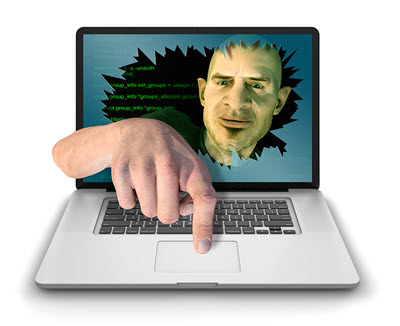
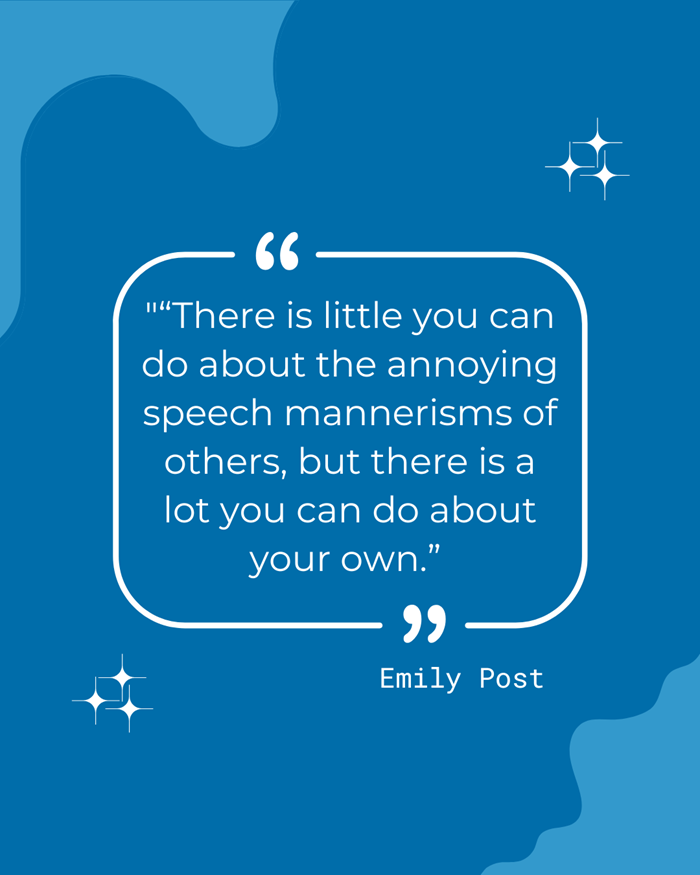
Few trolls would probably recognize the name Emily Post, nor would they care. But what about the rest of us? Do we retain a sliver of respect for the lessons learned from someone who became the definition of a civil society?
It is easy to blame social media for the rise in incivility. But social media has become a tool that simplifies the path toward incivility including in the workplace. And employers are paying the price for it.
Bad Manners or Incivility?
Do you remember when we never discussed politics or religion? Perhaps we knew what an explosive response was likely to occur when we got into those topics. Or perhaps you are not as old as I am and those topics were never off limits. 🙂
The Etiquette Tradition
But I cannot believe Emily Post is not rolling over in her grave. I wonder how she would view the world today. Before you dismiss Emily as an old-fashioned, out-of-touch relic, consider that she was a single mother of two (after she divorced her husband) and a vocal opponent to alcohol prohibition.
Although not a drinker herself, Emily Post, “believed absolutely that the government must not interfere with what she considered citizens’ rights.” Sounds pretty modern.
The Emily Post Institute, Inc. is a fifth-generation family business that has carried on promoting the etiquette tradition. The Institute promotes “…etiquette based on consideration, respect and honesty…”
Consideration, respect, and honesty. Tell me we could not use those traits in our business and personal lives.
Incivility on the Rise
For years, I felt the loss of what we old boomers call basic good manners. But the level of bad behavior ratcheted up during the pandemic, and it has only gotten worse.
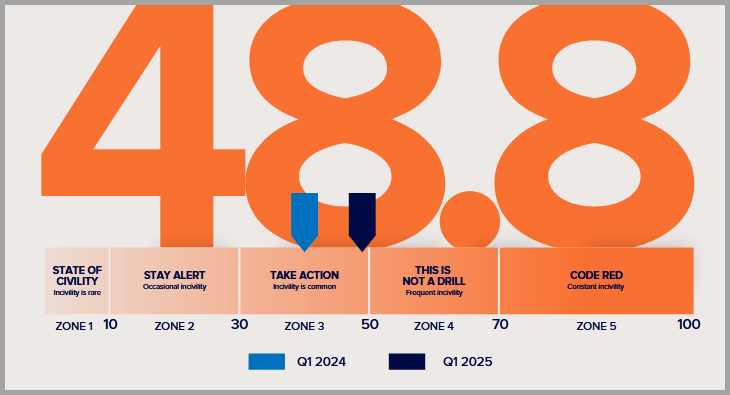
At the start of 2024, the Society for Human Resource Management (SHRM) decided to track the pulse of civility across the United States. The Civility Index report grades the state of civility (see below) with the 1st quarter of 2025 receiving a 48.8 grade, a 6.5% increase from the same time the year before.
The score reflects a level described as Take Action – incivility is common.
Employer cost of incivility due to absenteeism and decreased productivity: A whopping $2.1 billion daily/$766 billion annually!
A poll of 800 managers and employees across 17 industries revealed the fallout from those who experienced incivility in the workplace.
- 47% intentionally decreased time spent at work
- 63% lost work time avoiding the offender
- 66% said their performance declined
- 78% said their commitment to the organization declined
- 80% lost time worrying about the incivility incident
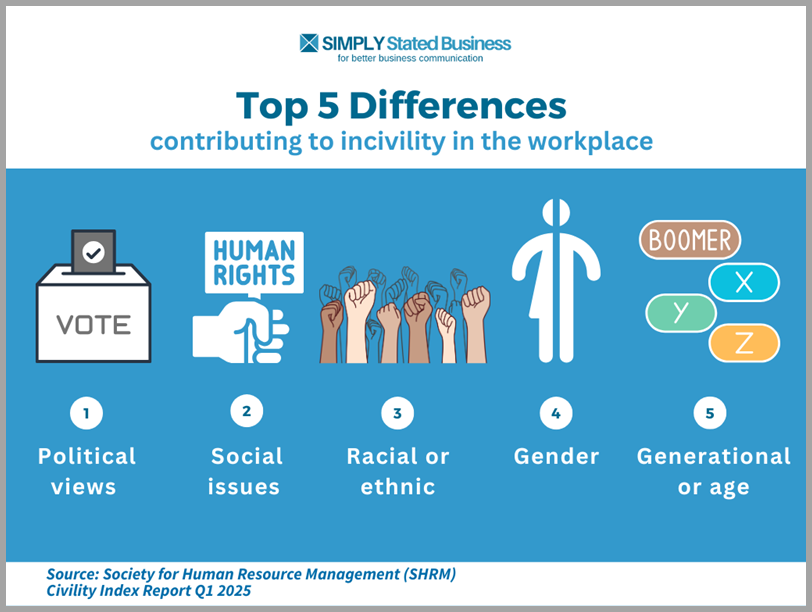
The SHRM report cites the Top 5 Contributors to Incivility in the Workplace as a result of the following differences.
Return to Civility
In the current U.S. environment, it is difficult to remain positive. Incivility is a way of life and becomes overwhelming in its intensity. I love this definition of civility from the Institute of Civility.
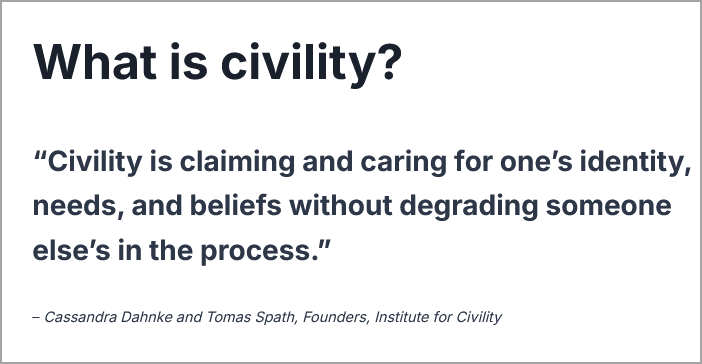
As someone who committed to 2025 goals to Be Positive – Be Kind – Be Caring, I ask myself how can I help return to civility in business communication (or any form of communication).
As this site focuses on better business communication, the following ideas relate to business communication. Although, as my good friend, editor, and fiction writer Maryann Miller says, the tips often apply to other forms of writing.
#1 – Start by listening.
I was going to write, “Shut up and listen,” but figured that was not exactly civil. 🙂 Few skills sound so simple yet are so difficult.
LinkedIn as a platform has changed a lot in the 16-plus years I have been on it. In the past, few members would post political or other “non-work” issues on their feeds. As LinkedIn grew and more members joined, long-time members chastised newbies with admonishment of, “This is not Facebook”
But that all blew up. Like many social media platforms, civility has gone out the door. While I have never understood how someone rationalizes nasty, angry responses on a business networking site, the personal attacks are beyond justification.
“Most of the successful people I’ve known are the ones who do more listening than talking.”
― Bernard M. Baruch
Personal Listening
Listening is a lost art in personal interactions, too, especially in the current environment.
Recently, I discovered a close friend of mine had opinions that were the polar opposite of what I thought she believed. And, of course, I could not believe they were not aligned with mine. 😉
It is easier to listen when the person is special to us. Although in today’s chaotic world, that’s not always the case. Just think of the pandemic and the families torn apart.
The haze of disbelief and anger cloud our mind, making listening especially challenging. What was different for me in this scenario was I really wanted to understand why my friend felt the way she did. So, I listened.
- Some of her points I understood, even if I did not necessarily agree on every point.
- I accepted there were points we would not agree on.
- We both appreciated being heard.
Circling back to the Emily Post Institute, we considered, respected, and were honest with each other.
#2 – Choose my battles.
The best way to deal with the trolls is to ignore them. Their purpose in life is to create a stir, and frankly, they are not worth my time.
The Atlantic had an interesting article, The Strength You Gain by Not Taking Offense (sorry, paywall). In the article, it cited a Pew Research Center study that revealed 62% of American responders felt a big problem is “people being too easily offended by things others say.” So, taking a breath to check my emotions is a key element in choosing my battles.
But some discussions are worth the effort to bring civility back to the workplace and our personal lives. Like the one I had with my friend. When we listen, we learn. Learn about others and their beliefs, and we learn more about ourselves.
#3 – Educate myself.
Do you feel like the biggest communication challenge is verifying the truth? Even artificial intelligence (AI) cannot be trusted. Or perhaps I should say, especially AI.
But think about the following scenario.
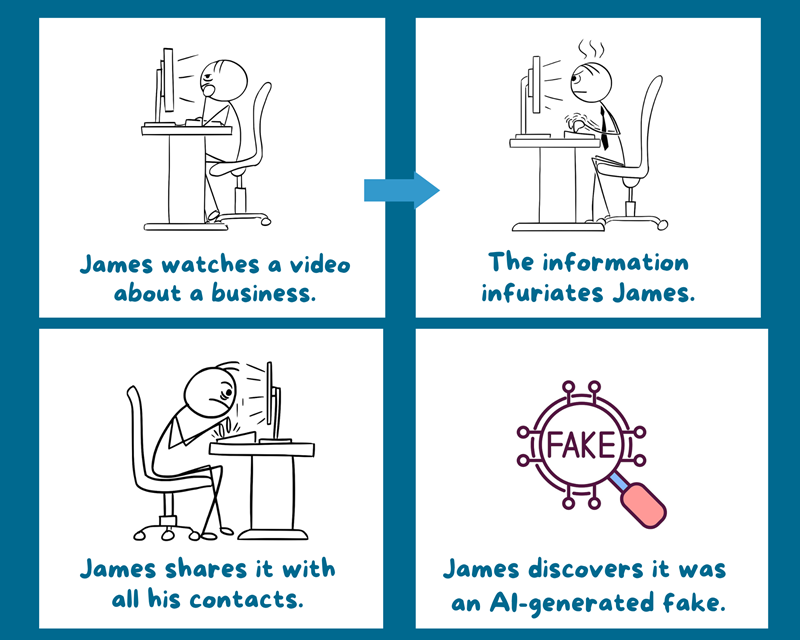
Now, take the above scenario and imagine James meets the CEO at a business meeting. And the CEO knows who James is – thanks to his vitriolic social media sharing. Kiss any business with that company good-bye.
Research in my early days as a business writer who specialized in healthcare had its challenges. The biggest challenge was wading through all the bad data. AI churns an even larger abundance of bad information. To the point that AI searches come with a disclaimer regarding its accuracy.
Whether the topic is healthcare, politics, or some other hot issue, beware of falling down the rabbit hole of bad information. Find credible sources and verify what you read or hear. The following are a few sources I use.
- Tangle News – a non-partisan newsletter on politics
- Snopes – a fact-checking source and reference source for all those emotion-stirring stories out there
- FactCheck – a nonpartisan, nonprofit “consumer advocate” on topics such as politics, health, and climate change
- NPR (national public radio) FactCheck – an independent, nonprofit media organization
- Wired – a magazine focused on technology and its effect on culture, the economy, and politics
How about you? What are some of your favorite sources for keeping it civil and fair in your part of the world?
Defusing Incivility
We all have a part in the rising level of incivility, whether it’s in the workplace or our personal lives. In my world, it starts with me.
- Am I going to add fuel to the raging chaos or douse it with a search for the truth?
- Will I hold myself and others accountable or roll into an apathetic ball of denial?
- Do I live up to the goal – Be Positive, Be Kind, Be Caring – or get sucked into the drain of incivility?
I commit to do better, especially when it is extremely hard to do so.
How do you deal with rising incivility? Share your thoughts and suggestions in Comments.
Okay, getting off my soapbox now. 😀
0 Comments